


Last updated: October 11, 2026
Key Takeaways
- Start with the intro, then the comparison structure, then the product picks.
- Protect existing traffic and commissions before making major changes.
- Refresh intent, update products, add selection criteria, and cut anything dated or repeated.
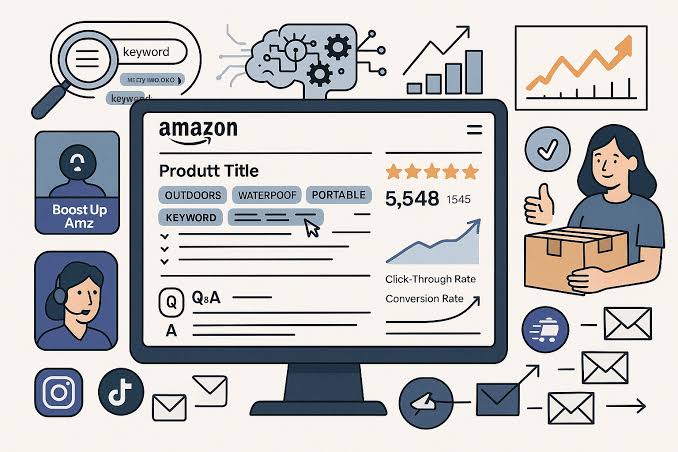
If you are learning how to update old Amazon affiliate articles for better rankings, the core move is a focused refresh, not a full rewrite. In most cases, the best results come from matching current search intent, updating products and prices, and strengthening trust signals. A quick audit can tell you whether the page still deserves to rank, and a careful edit can often improve clicks without changing the URL.
What Actually Makes an Old Affiliate Article Rank Again?
If the page already gets impressions but low clicks, then the headline, snippet, or product mix is probably stale; if it gets almost no impressions, then the whole page likely missed intent or lost relevance. That difference matters because a page with 20 impressions a day needs a different fix than one with 2,000.
The fastest gains usually come from a better match to the current query, stronger topical coverage, and cleaner on-page trust signals. An Amazon affiliate page from 2021 that still says “best” but never says what changed since then is easy for Google to ignore. The page may also be carrying dead links, out-of-stock products, old model numbers, or comparisons against items nobody searches for anymore.
Therefore, I would treat the update like triage:
- Check Search Console for the query the page actually ranks for, not the keyword you wished it ranked for.
- Open the page and compare the intro, H2s, and product list against current search results.
- Replace expired products, discontinued models, and dated references first.
- Add one clear selection method so the page looks edited, not merely dusted off.
- Improve the answer to the main question in the first 150 words.
- Strengthen the comparison section with real differentiators: size, capacity, battery life, material, compatibility, or warranty terms.
- Trim anything that reads like filler.
Here is a simple way to think about the job:
| Situation | Best Path | Why Other Options Fail |
|---|---|---|
| Rankings are flat but impressions exist | Refresh intent, headings, and product lineup | A title tweak alone rarely fixes a page that no longer matches the query |
| Rankings fell after products changed | Replace stale products and references | Keeping dead models signals neglect |
| Traffic is fine but clicks are weak | Rewrite title, meta description, and intro | The page may be ranking, but it is not persuading searchers |
| The article is thin | Add comparison criteria, use cases, and exclusions | Thin pages usually lose to more useful roundups |
Quick check: if the page title still names products you would not recommend today, you are not editing — you are preserving decay.
How do I know whether to refresh, rewrite, or retire it?
If the page has some search visibility and the topic still has demand, then refresh it; if the query intent changed or the product category is basically obsolete, then rewrite it from the ground up; if the page has no realistic path to usefulness, then retire it and consolidate signals elsewhere.
I would use a blunt test. Ask: does the article still answer a real buying question in 2026, or is it only alive because it once ranked? If the answer is the second one, a light update will waste time. A “best DSLR for beginners” page from years ago is a different job than a “best mirrorless camera under $800” page now. Search intent changes. So do product categories.
This is the method I would follow before touching copy:
- Open Google Search Console and note the main query, average position, clicks, and impressions for the page over the last 3 months.
- Search the main query in an incognito window and scan the top 10 results.
- Write down what those pages agree on: list format, comparison style, price bands, and buyer concerns.
- Check whether the page still targets that same concern.
- If it does, refresh the content in place.
- If it does not, rebuild the angle and H2 structure.
- If the page has no impressions and no backlinks worth keeping, consider merging it into a stronger page.
A page that used to rank because it answered “what is the best budget air fryer?” may now need to answer “which air fryer is easiest to clean?” That sounds small, but it changes every section.
This is also where a lot of generic advice goes wrong: it tells you to “update content” without asking what changed in the SERP. A page can be up to date on product names and still miss the query by a mile.
Quick check: if your page is ranking for a query it never intentionally targeted, do not start editing sentences — start with intent.
The 3 things I change first on an Amazon affiliate page
If the article still deserves to exist, then I would fix the intro, the comparison structure, and the product picks in that order. Those three pieces do more ranking work than polishing stray sentences.
The intro should say exactly who the page is for and what standard is being used. If the article is about “best cheap standing desks,” the opening should immediately say what “cheap” means in this context — usually a price band such as under $250 or under $300 — and what trade-offs come with that range. If the opening is vague, the reader bounces and the page looks thin.
The comparison structure should separate products by use case, not just by star power. A generic top-10 list often ages badly because it cannot survive changes in price or stock. A page organized around needs — small apartments, heavy daily use, easy setup, quiet operation, travel-friendly design — is much easier to keep current.
The product picks need three checks:
- Is the product still sold by Amazon or a credible seller?
- Is the model still the one people search for?
- Does it still earn its place in the list?
If the answer to any of those is no, swap it out. Do not keep a product just because it once converted. Out-of-stock items and old model numbers are ranking poison.
I would edit in this order:
- Rewrite the first paragraph to match the current query and buying situation.
- Update the H2s so each one covers a distinct use case.
- Replace dead or weak products.
- Add current differentiators: dimensions, capacity, power rating, material, or compatibility.
- Tighten the recommendation language so each item has a clear reason to exist.
- Remove repeated phrases like “best review,” “top review,” or any other awkward pattern that makes the page feel machine-written.
- End each product section with a real limitation, because honest trade-offs help trust.
This is not for pages that have no purchase intent. If the topic is purely informational, Amazon links may be the wrong center of gravity.
Quick check: if every item on the page could fit into one sentence without a reason, the page is too shallow to rank well for long.
What to do when your old post still has links and sales
If the article still earns clicks or commissions, then the update should protect existing equity before anything else. I would keep the URL, keep any strong backlinks, and refresh the content in place unless the page has become a different article entirely.
That means I would not rush to delete a page that still gets traffic just because the design looks old. A stable URL with some history is often worth more than a shiny new draft. The real question is whether the page still deserves that URL.
Use this path if the page has measurable value:
- Export the last 16 months of Search Console data for the page.
- Note which queries bring impressions and which bring clicks.
- Check the current SERP for each query to see whether the intent has shifted.
- Open every Amazon link and remove anything discontinued or clearly mismatched.
- Update price language to avoid hard numbers unless you can verify them on the live page.
- Add one short “how I picked these” section that explains the selection criteria in plain English.
- Refresh the title and meta description so they promise the current benefit, not the old one.
The useful benchmark here is not “did I add more words?” It is “did I make the page better at deciding?” A good affiliate article helps the reader eliminate options. If it does not do that, it will struggle even if the keyword is still present in all the right places.
I would be careful with affiliate disclosure placement too. It should be clear and easy to find, but it does not need to dominate the page. And if you are writing about products where safety matters, point readers to the manufacturer’s documentation or a standards body such as ASTM International or the Consumer Product Safety Commission before any buying recommendation.
Quick check: if your page still brings traffic, preserve the URL and improve the decision path instead of chasing a fresh start.
How do I update old Amazon affiliate articles for better rankings?
If you want better rankings, then update the page the way a careful editor would: align intent, modernize the product set, add selection criteria, and remove anything dated or duplicative. A “content refresh” that only swaps a few nouns is usually too small to move the needle.
I would use this sequence on a page that deserves to be saved:
- Identify the main query in Search Console and write it at the top of your notes.
- Compare the page against the top 5 ranking results for that query.
- Rewrite the opening so the first sentence answers the buying question directly.
- Adjust the H2s so each one covers a different decision point, such as size, budget, use case, or durability.
- Replace outdated products with current alternatives that are easy to find on Amazon.
- Add concrete criteria: wattage, dimensions, weight, battery life, material, capacity, or compatibility.
- Remove sections that repeat the same recommendation in different words.
- Check links, image captions, and alt text for old model names and broken references.
- Publish the update, then watch Search Console for 2 to 6 weeks before making another big change.
I would not overpromise on speed. Google can react quickly, but a meaningful recovery often takes time, especially if the page has been stale for months. If the update is substantial, the page may need a few crawling cycles before rankings settle. For timing and indexation questions, Google Search Central explains that changes can take time to be reflected in Search results.
This is also the place to be honest about who the article is not for. A broad “best Amazon products” page is usually the wrong format if the query has become highly specific. If the search intent is narrow, write narrow. If the product space has too many similar models, a comparison table may be stronger than long prose.
Quick check: if your update does not change the reader’s decision, it probably will not change the ranking for long.
Edge cases where the normal advice breaks down
If the page falls into one of these cases, then standard refresh advice is not enough, and I would change the plan.
-
The products are seasonal.
What changes: relevance resets every year.
What to do instead: update before the season starts, swap in current year models, and rewrite the intro around timing, not permanence. -
The category is fast-moving, like headphones or smart home gear.
What changes: model names and feature sets age fast.
What to do instead: keep the page centered on buying criteria rather than one fixed lineup. -
The affiliate page targets a YMYL-adjacent topic, like baby gear or kitchen safety.
What changes: trust matters more.
What to do instead: cite manufacturer documentation, safety standards, and recognized bodies such as the Consumer Product Safety Commission when relevant. For safety-sensitive topics, consider consulting a qualified professional before publishing recommendations. -
The page ranks for a query that has become informational, not commercial.
What changes: readers want explanation before products.
What to do instead: add a clear explainer section before the product list, or split the page into two pieces. -
The page is built around products that Amazon no longer carries well.
What changes: the page loses usefulness even if the topic still exists.
What to do instead: shift to currently available alternatives or consolidate the topic into a broader guide. -
The article gets traffic from a long-tail query with very specific intent.
What changes: broad edits can hurt.
What to do instead: keep the focus tight and improve only the exact section that answers the query.
Quick check: if the market changes faster than your page can, the fix is a new structure, not a nicer rewrite.
How I would choose what stays and what goes
If the page is long, I would keep only the parts that help a buyer decide within 30 to 60 seconds. That usually means one intro, one short method section, a comparison table, a few product blocks, and a closing recommendation. Everything else has to justify itself.
Here is the sorting test I would use:
- Keep: product specs, clear use cases, current model names, comparison criteria, and honest limitations.
- Cut: repeated praise, vague filler, recycled intro lines, and old references to products that no longer matter.
- Rewrite: headings that sound generic, paragraphs that never name a specific buying concern, and recommendations that do not explain why one item beats another.
- Merge: overlapping sections that say the same thing in different words.
- Remove: dead links, broken images, and any sentence built around a product that is no longer relevant.
I would also make sure the page is not pretending to be more current than it is. If the article has not been updated in two years, say so only where useful and only if that matters to the reader. Do not fake freshness with dates sprinkled everywhere.
If you want one hard rule from me, it is this: an updated Amazon affiliate article should help the reader choose faster than the old version did. If it only looks newer, it is not finished.
Quick check: if a paragraph does not help the reader buy or exclude a product, it is probably dead weight.
FAQ
How often should I update old Amazon affiliate articles?
I would review them every 3 to 6 months, and faster for seasonal or fast-changing categories like tech, home appliances, or baby gear.
Should I change the title every time?
Only if the current title no longer matches search intent or the product set.
Can I keep the same URL after updating?
Yes. If the page still has value, keeping the URL usually protects equity and backlinks.
What is the safest first change for a YMYL-adjacent product page?
Update the content carefully, add clear sourcing, and consult a qualified professional when safety or health advice is involved.
Do product prices need to be exact in the article?
Only if you can verify them on the live page; otherwise, use ranges or avoid hard numbers.
Drafted with AI; not yet reviewed by a person.





Leave a comment